
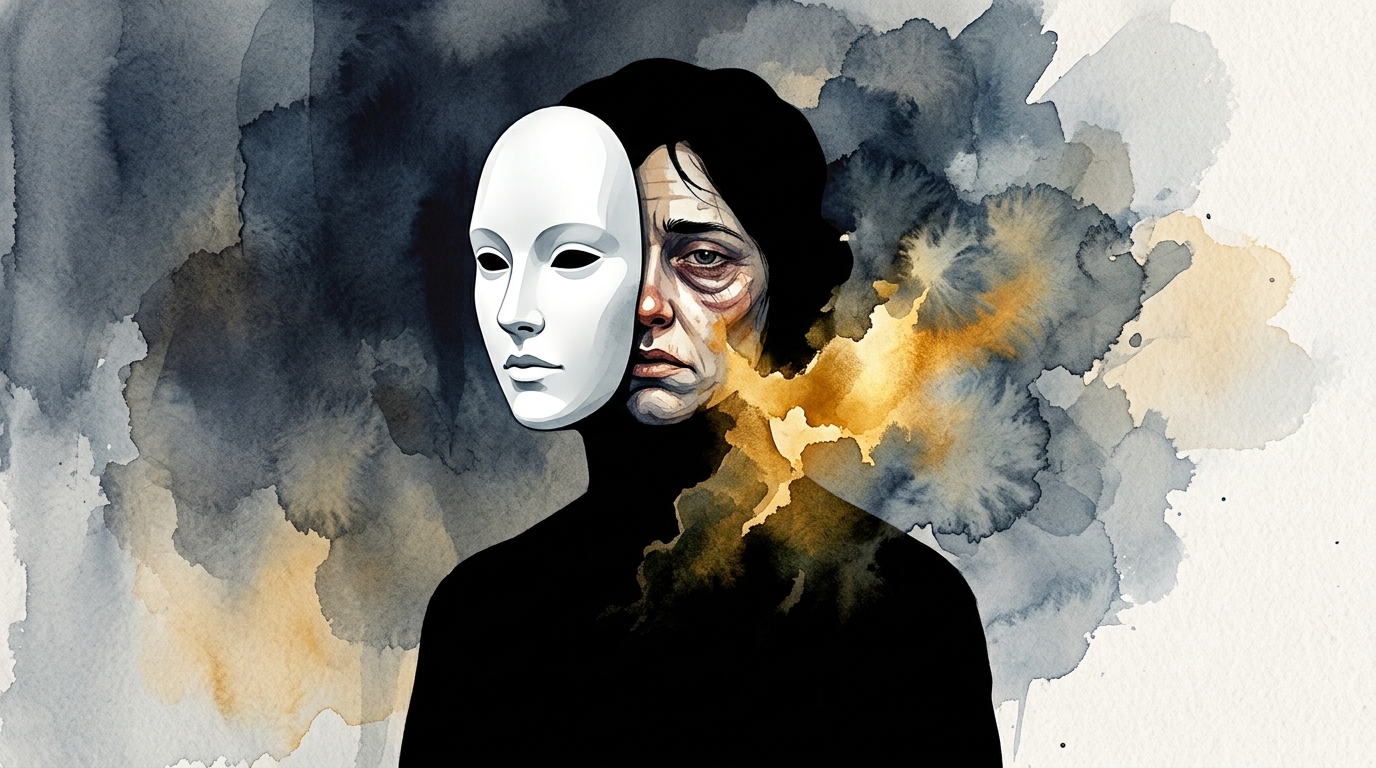
The Hidden Fatigue of Constant Masking
Many people move through the world carrying an invisible workload.
They show up to work. They attend social events. They maintain relationships. They meet responsibilities. From the outside, everything may appear manageable.
Yet internally, they may be working hard to monitor their behaviour, adjust their responses, suppress certain reactions or present themselves in ways that feel more acceptable to others.
This process is often referred to as masking.
While masking can sometimes serve a protective function, maintaining it over long periods can be exhausting. The fatigue that accompanies it is often overlooked because the effort itself remains largely invisible.
What Is Masking?
Masking refers to the conscious or unconscious process of modifying how one expresses thoughts, emotions, behaviours or identity in order to meet external expectations.
People mask for many reasons.
Some do so to avoid judgment or discrimination. Others learn to hide aspects of themselves in order to fit into social, educational, family, or professional environments.
Masking can take many forms:
- Hiding emotional distress
- Suppressing sensory needs
- Rehearsing conversations before social interactions
- Monitoring facial expressions or body language
- Avoiding behaviours that may be perceived as different
- Concealing aspects of identity
- Pretending to feel comfortable when feeling overwhelmed
While anyone may engage in masking at times, it is particularly common among neurodivergent individuals and members of marginalized communities, including many LGBTQIA+ individuals.
Why Do People Mask?
Masking is often misunderstood as a choice made purely for social convenience.
In reality, it frequently develops as a response to past experiences.
A child who is repeatedly told they are “too sensitive” may learn to hide emotional reactions.
A neurodivergent person who is criticized for natural behaviours may learn to suppress them.
A queer or transgender individual may conceal parts of their identity in environments that do not feel safe or affirming.
In these situations, masking can become a strategy for navigating social systems, maintaining relationships or reducing the risk of rejection.
The goal is often not deception.
The goal is safety.
The Cost of Constant Monitoring
The challenge is that masking requires energy.
It involves ongoing observation, adjustment and self-management.
Many people who mask describe feeling as though they are constantly scanning their environment.
Questions may arise such as:
- Am I acting appropriately?
- Did I say the right thing?
- How am I being perceived?
- Should I hide this reaction?
- Is it safe to be fully myself here?
This level of monitoring can consume significant cognitive and emotional resources.
Over time, the cumulative impact may contribute to:
- Emotional exhaustion
- Burnout
- Anxiety
- Difficulty relaxing
- Reduced self-confidence
- Feelings of isolation
- Disconnection from one’s authentic preferences or needs
The fatigue often remains hidden because others only see the outcome, not the effort required to maintain it.
When Masking Becomes Difficult to Sustain
Many people can maintain masking for extended periods.
However, there often comes a point when the effort becomes increasingly difficult.
This may occur during periods of stress, life transitions, burnout, grief, illness or major change.
Individuals may find themselves feeling emotionally depleted without fully understanding why.
Some describe a sense of constantly performing. Others report feeling disconnected from themselves or uncertain about who they are beneath the adaptations they have learned.
These experiences do not necessarily indicate personal failure.
They may reflect the reality that sustained masking places considerable demands on the nervous system.
The Role of Self-Awareness
Recognizing masking is not about eliminating every social adaptation.
All people adjust their behaviour to some extent depending on context.
The goal is not complete transparency in every situation.
Rather, it is developing awareness of when masking is occurring, why it developed and whether it continues to serve a helpful purpose.
Questions for reflection might include:
- Where do I feel most able to be myself?
- When do I feel most exhausted after social interactions?
- What parts of myself feel difficult to express openly?
- What environments support authenticity rather than performance?
- What needs might be hidden beneath my adaptations?
These questions invite curiosity rather than judgment.
Creative Expression and Authenticity
One of the challenges of masking is that people can become disconnected from their own internal experiences.
When significant energy is spent managing external presentations, there may be less space to notice personal feelings, preferences and needs.
Creative processes can offer opportunities to reconnect.
Artmaking, movement, music, drama, writing and other expressive modalities allow individuals to explore experiences without needing to explain or justify them.
Creative expression often bypasses some of the social expectations that shape everyday interactions.
Rather than focusing on how something appears to others, attention can shift toward what feels genuine, meaningful or present in the moment.
This process can support self-discovery and strengthen connection with aspects of oneself that may have been hidden, minimized or overlooked.
The Importance of Being Understood
Masking often becomes less necessary in environments where people feel safe, respected and understood.
This does not mean individuals stop adapting entirely.
Rather, it means they can relax some of the effort required to protect themselves.
Supportive relationships, affirming communities, and therapeutic spaces can help create conditions where authenticity becomes more possible.
Being understood does not remove life’s challenges.
However, it can reduce the burden of carrying those challenges alone while simultaneously managing how they are perceived.
A Closing Reflection
The fatigue of masking is often invisible.
Others may see competence, confidence or calmness while remaining unaware of the effort required to maintain that appearance.
Understanding masking invites a shift in perspective.
Instead of asking why someone seems tired, withdrawn or overwhelmed, we might ask what they have been carrying and how much energy it takes to navigate the world each day.
Authenticity is not always simple. Safety, context and lived experience all play a role.
Yet when people find spaces where they can show up with less performance and more presence, the nervous system often gains something it has been needing all along:
The opportunity to rest.