Movement and Dance as Decolonial Healing
There is a growing recognition across therapeutic, cultural and academic spaces that healing cannot be separated from the contexts in which harm has occurred. For many individuals and communities, particularly those shaped by histories of displacement and cultural erasure, healing is not only intrapsychic. It is relational, embodied and collective.
Within this understanding, movement and dance are being revisited not simply as creative or recreational practices, but as pathways of decolonial healing. They offer ways of engaging the body that move beyond verbal processing, reconnecting individuals to forms of expression, knowledge and identity that have often been marginalized or suppressed.
Understanding Decolonial Healing
Decolonial healing refers to processes that actively question and move beyond dominant frameworks that have historically defined what is considered valid knowledge, expression and care.
In many Western therapeutic models, healing has been structured around:
• individual cognition
• verbal articulation
• linear progress
• clinical interpretation
While these approaches can be valuable, they do not encompass the full range of human experience. Many cultures have long engaged in healing practices that are communal, rhythmic, symbolic and embodied.
Decolonial approaches seek to:
• recognise multiple ways of knowing and expressing
• honour cultural and ancestral practices
• restore agency in defining one’s own healing process
• shift away from deficit-based interpretations of difference
Within this framework, movement and dance emerge as significant modalities.
The Body as a Site of Memory and Knowledge
The body carries more than physical sensation. It holds patterns shaped by lived experience, environment, and history.
In contexts of colonisation, the body has often been regulated, controlled or disciplined. Cultural expressions such as dance, gesture and ritual may have been restricted, reinterpreted or devalued. Over time, this can lead to a disconnection from embodied forms of identity and expression.
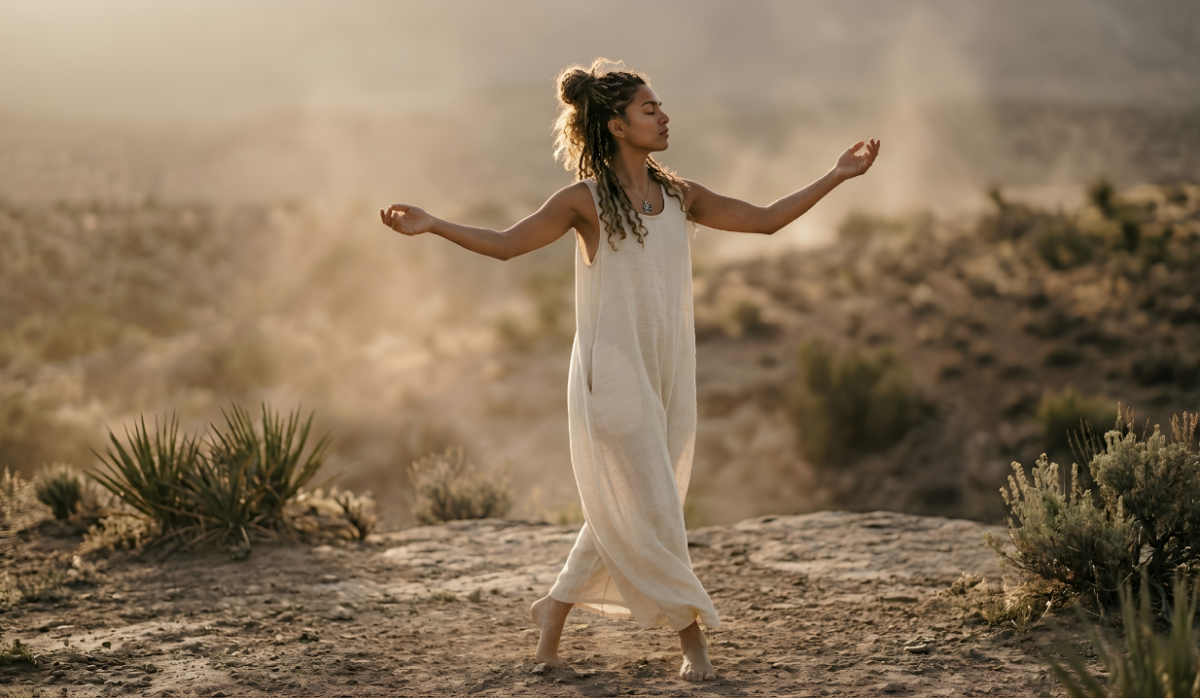
Movement-based practices offer a way to re-engage with the body not as an object to be controlled, but as a source of knowledge.
This includes:
• sensory awareness
• rhythm and timing
• spatial orientation
• relational movement with others
These elements are not only expressive. They are also regulatory. Engaging in movement can support shifts in the nervous system, facilitating states of grounding, activation or release depending on the context.
Dance as Cultural and Relational Practice
Across cultures, dance has functioned as more than performance. It has been a medium for storytelling, ritual, community cohesion and transmission of knowledge.
In many Indigenous and diasporic traditions:
• movement patterns carry historical narratives
• rhythm connects individuals to collective experience
• repetition reinforces memory and belonging
• improvisation allows for personal expression within shared structure
When individuals engage with these forms, they are not only moving their bodies. They are participating in a lineage of meaning-making that extends beyond the individual self.
This is particularly relevant in decolonial healing, where reconnection to cultural practices can support a sense of continuity and identity that may have been disrupted.
The Limits of Verbal Processing
Not all experiences are easily articulated through language.
Trauma, particularly when it is collective or intergenerational, may be held in ways that are pre-verbal or non-verbal. Attempting to process such experiences solely through conversation can feel limiting or, at times, inaccessible.
Movement and dance provide alternative entry points.
Through gesture, posture, and rhythm, individuals can:
• express affect without needing precise language
• explore boundaries and agency through spatial movement
• access memories and sensations that are not readily verbalised
• engage in processes of release and integration
This does not replace verbal therapy. Rather, it expands the range of possibilities for engagement.
Reclaiming Movement in Practice
Re-engaging with movement as a form of healing does not require formal dance training or performance skill. The emphasis is not on technique, but on experience.
Below are a few movement-informed practices that align with decolonial perspectives.
1. Returning to Natural Rhythm
What you’ll need:
• A quiet or comfortable space
• Optional music that feels culturally or personally meaningful
How to do it:
• Begin by standing or sitting comfortably
• Notice your natural rhythm, this may be your breath, a subtle sway, or small repetitive movements
• Allow the movement to develop without directing it toward a specific outcome
Purpose:
This practice supports reconnection with internal rhythm, rather than imposed structure. It centres the body’s own pacing and response.
2. Movement as Story
What you’ll need:
• Space to move freely
How to do it:
• Reflect on a personal or cultural story, this does not need to be fully formed
• Allow your body to respond through gesture, posture or sequence of movement
• There is no need to translate the movement into words
Purpose:
Movement becomes a medium for narrative expression, particularly when language feels insufficient or restrictive.
3. Relational Movement
This can be done individually or with others.
How to do it:
• Notice how your movement changes in the presence of another person or imagined presence
• Explore proximity, distance, mirroring or contrast in movement
• Attend to how boundaries are experienced physically
Purpose:
This practice highlights the relational dimension of movement, supporting awareness of connection, autonomy and responsiveness.
Ethical and Cultural Considerations
Engaging with movement as decolonial healing requires attentiveness to context.
It is important to:
• approach cultural practices with respect and awareness
• avoid appropriating forms without understanding their significance
• recognise the diversity within and across cultural traditions
• centre voices and practitioners from the communities these practices originate from
For therapists and facilitators, this includes ongoing reflection on positionality, training and the frameworks being used.
A Closing Reflection
Movement and dance as decolonial healing invite a shift in how healing is understood.
Rather than locating healing solely in cognition or verbal articulation, these practices recognise the body as central. They acknowledge that expression, regulation and meaning-making can occur through rhythm, gesture and relational movement.
In doing so, they open space for approaches that are not only therapeutic but also culturally grounded and historically aware.
This is not a return to a single way of healing. It is an expansion, one that makes room for multiple forms of knowledge, expression and connection to coexist.