
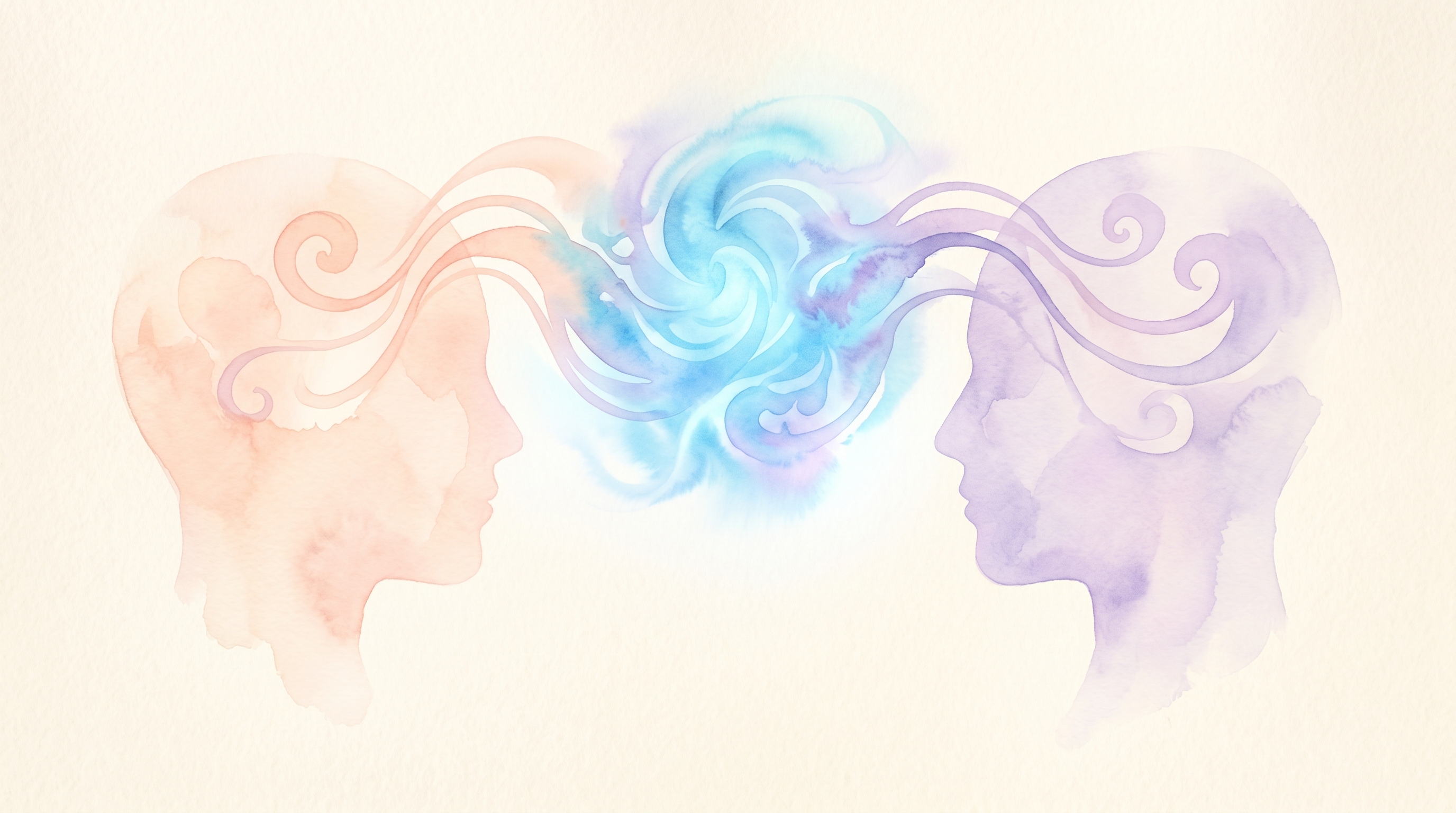
The Difference Between Being Accepted and Being Understood
Most people want to be accepted.
We want to belong within our families, friendships, workplaces, communities and relationships. Acceptance can provide a sense of safety. It can reassure us that we are welcome, included and valued.
Yet acceptance and understanding are not always the same thing.
It is possible to be accepted without feeling understood.
Someone may care about us, support us and want the best for us, while still struggling to fully grasp our experiences, emotions or ways of moving through the world. While acceptance can be deeply meaningful, many people discover that there is another human need beneath it: the desire to be genuinely understood.
This distinction can have a significant impact on emotional well-being, relationships and the therapeutic process.
What Does It Mean to Be Accepted?
Acceptance often involves allowing someone to exist as they are without rejection.
It may sound like:
- “I support you.”
- “You belong here.”
- “I care about you.”
- “You are welcome.”
These messages matter.
For individuals who have experienced exclusion, discrimination, bullying or judgment, acceptance can be profoundly healing. It creates a foundation of safety from which growth and connection become possible.
Acceptance communicates that a person does not need to earn their place through performance, perfection or conformity.
However, acceptance alone does not always create understanding.
What Does It Mean to Be Understood?
Understanding involves something deeper.
It is the experience of feeling that another person has genuinely recognised, acknowledged or connected with what is happening internally.
Being understood does not mean someone has lived the exact same experience. Rather, it means they are making an effort to appreciate your reality without dismissing, minimizing or reshaping it.
When people feel understood, they often describe feeling:
- Seen
- Heard
- Validated
- Less alone
- More connected
Understanding creates a sense that one’s inner world has been witnessed rather than simply tolerated.
Why Acceptance Sometimes Feels Incomplete
Many people can identify moments when they felt accepted but not understood.
A person may disclose their anxiety and hear, “Don’t worry, everything will be okay.”
A neurodivergent individual may be told, “We accept you exactly as you are,” while their sensory needs continue to be overlooked.
A member of the LGBTQIA+ community may feel welcomed in a space but still feel that important parts of their experience remain unseen.
In these situations, acceptance is present. Yet something may still feel missing.
The gap often emerges because understanding requires curiosity.
It asks us to move beyond assumptions and become interested in another person’s lived experience.
Without that curiosity, acceptance can sometimes remain surface-level.
The Human Need to Feel Understood
Psychological research consistently highlights the importance of connection and belonging for emotional well-being. Feeling understood contributes to both.
When our experiences are recognised by another person, it can help reduce isolation and strengthen our sense of identity.
This is especially important during times of stress, grief, uncertainty or major life transitions.
Being understood does not remove pain.
It does not solve problems.
However, it can change how those experiences are carried.
Difficult emotions often become more manageable when they are shared within a relationship that offers empathy and understanding.
Understanding Through Creative Expression
One of the challenges of feeling understood is that not all experiences are easy to explain through words.
Some emotions feel too complex.
Some memories feel fragmented.
Some experiences exist more in sensation, imagery, movement or feeling than in language.
This is one reason expressive arts therapies can be valuable.
Creative processes provide alternative pathways for communication and self-exploration.
An image, movement, piece of music, story or symbolic creation may express something that would be difficult to articulate directly.
Within a therapeutic relationship, these expressions can become points of connection and reflection.
The goal is not for the therapist to interpret or define the person’s experience. Rather, it is to remain curious, collaborative and responsive to what emerges.
In this way, understanding becomes something that is built together.
The Role of Understanding in Therapy
A common misconception is that therapy is primarily about techniques, strategies or interventions.
While these elements can be helpful, research consistently shows that the quality of the therapeutic relationship plays a significant role in positive outcomes.
People are more likely to engage in meaningful therapeutic work when they feel:
- Respected
- Heard
- Safe
- Understood
This does not mean the therapist always agrees with every perspective. It means the therapist is committed to understanding the person’s experience before attempting to guide change.
For many individuals, this experience of being understood can be transformative.
Not because it provides answers, but because it creates a space where they no longer have to navigate difficult experiences alone.
A Closing Reflection
Acceptance matters.
It helps create belonging, safety and inclusion.
Yet understanding often reaches deeper.
It invites curiosity rather than assumption. It creates connection rather than simple tolerance. It allows people to feel seen in the fullness of their experiences, not just welcomed in their presence.
The difference between being accepted and being understood may seem subtle, but for many people, it is profound.
At its heart, understanding is not about having all the answers.
It is about being willing to witness another person’s experience with openness, care and genuine curiosity.
And sometimes, that experience of being understood can be one of the most healing aspects of any relationship.