
Neurodecolonization: Understanding the Meaning and Impact
By Eva San.
Neurodecolonization is a term from Mandan, Hidatsa and Arikara scholar Michael Yellow Bird. Neuro refers to our neurone and nervous system, the patterns in the brain and body that shape how we think, feel and respond. Neurodecolonization describes how our nervous system has been shaped by colonization.
Neurodecolonization is unlearning how neurocolonization teaches separateness (our disorder is an individual flaw), white superiority and the subjugation of racialized and Indigenous peoples, and relearning our deep relationality with land and all beings. So it is not just new facts about the brain. It is a practice of recognizing how our nervous systems embody colonial stories.
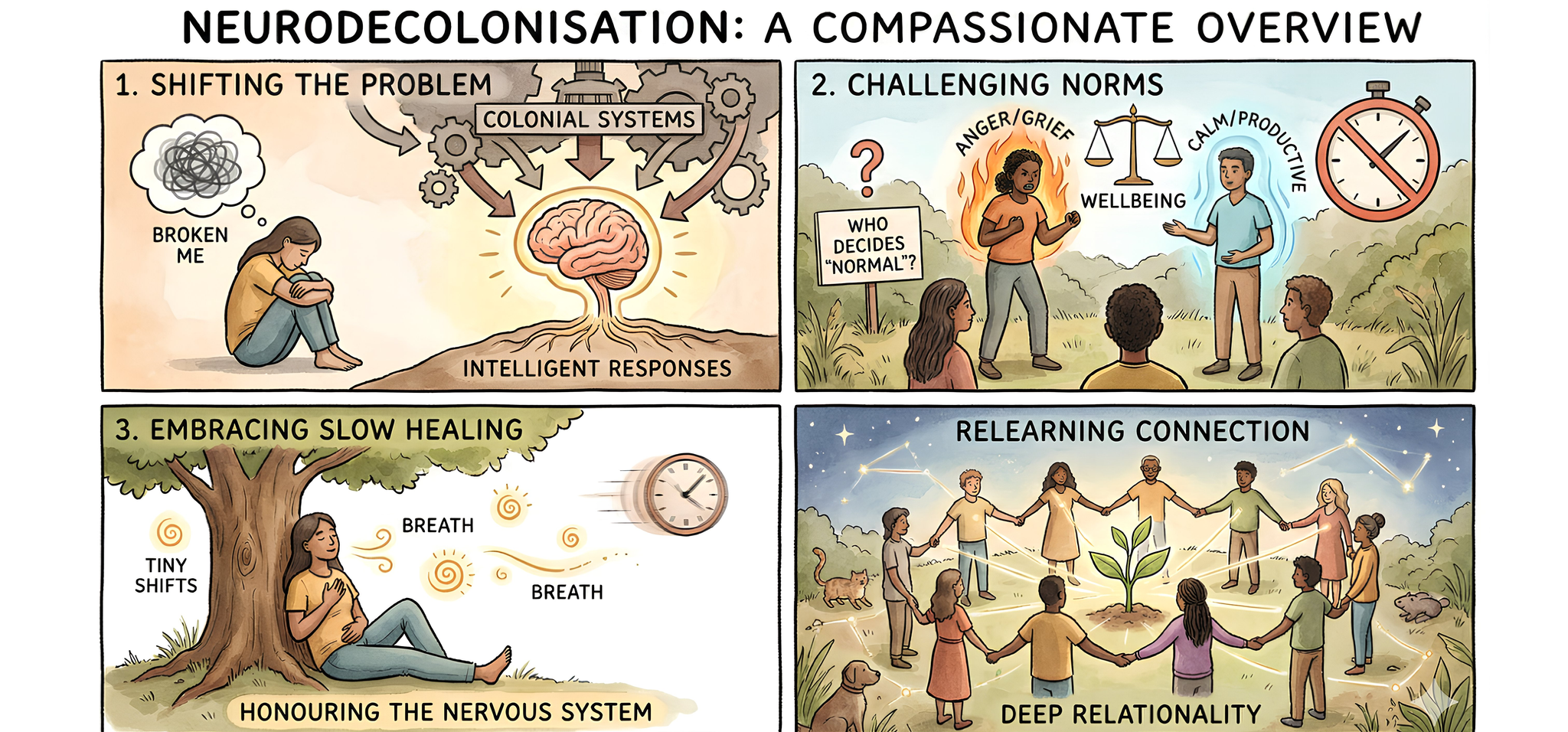
𝟭. 𝗜𝘁 𝗺𝗼𝘃𝗲𝘀 𝘁𝗵𝗲 𝗽𝗿𝗼𝗯𝗹𝗲𝗺 𝗼𝘂𝘁 𝗼𝗳 ‘𝗯𝗿𝗼𝗸𝗲𝗻 𝗺𝗲’
Colonial systems often frame distress as an individual responsibility; for example, your brain is disordered, or you are not resilient enough.
Neurodecolonization says instead:
- Your vigilance, shutdown, overachieving or collapse are intelligent responses to very real histories which affect present-day conditions.
- Your nervous system has been impacted by racism, colonization, capitalism and gendered violence, not just by personal events.
This softens shame. Healing becomes less about fixing your faulty brain and more about gently retraining a body that has been working overtime to protect you.
𝟮. 𝗜𝘁 𝘀𝘁𝗼𝗽𝘀 𝘂𝘀 𝘂𝘀𝗶𝗻𝗴 𝗰𝗼𝗹𝗼𝗻𝗶𝗮𝗹 𝗻𝗼𝗿𝗺𝘀 𝗮𝘀 𝘁𝗵𝗲 𝗺𝗲𝗮𝘀𝘂𝗿𝗲 𝗼𝗳 𝘄𝗲𝗹𝗹𝗯𝗲𝗶𝗻𝗴
Without a neurodecolonizing lens, even caring practitioners can slip into:
- Treating calm, compliant, productive behaviour as the gold standard.
- Pathologizing anger, protest, grief, spiritual experience or communal ways of being.
- Expecting people to regulate themselves backinto a world that keeps harming them.
Neurodecolonization asks:
- Who decides this version of regulation is normal?
- What kinds of bodies and cultures were used to define too much or too sensitive?
- What happens if we honour your nervous system’s wisdom about unsafe systems, rather than silencing it?
These are acts of compassion because they refuse to send people back into environments that are still harmful without naming that harm.
𝟯. 𝗜𝘁 𝗶𝗻𝘃𝗶𝘁𝗲𝘀 𝘀𝗹𝗼𝘄𝗲𝗿, 𝗸𝗶𝗻𝗱𝗲𝗿 𝗲𝘅𝗽𝗲𝗰𝘁𝗮𝘁𝗶𝗼𝗻𝘀 𝗼𝗳 𝗰𝗵𝗮𝗻𝗴𝗲
Colonial logics love speed, mastery and clear outcomes. Healing can easily become another productivity project.
Neurodecolonization centres practices like gentle attention and not knowing, and treats them as real work.
From a compassionate lens, this means:
- We honour tiny shifts, like one breath that reaches deeper, or one moment of self-kindness in a shame spiral
- We focus on building more capacity for connection, not on performing perfectly calm.
- The nervous system is approached as a companion we are learning to be with.
𝗪𝗵𝗮𝘁 𝗜 𝗵𝗮𝘃𝗲 𝗻𝗼𝘁𝗶𝗰𝗲𝗱 𝗮𝗯𝗼𝘂𝘁 𝗻𝗲𝘂𝗿𝗼𝗱𝗲𝗰𝗼𝗹𝗼𝗻𝗶z𝗮𝘁𝗶𝗼𝗻
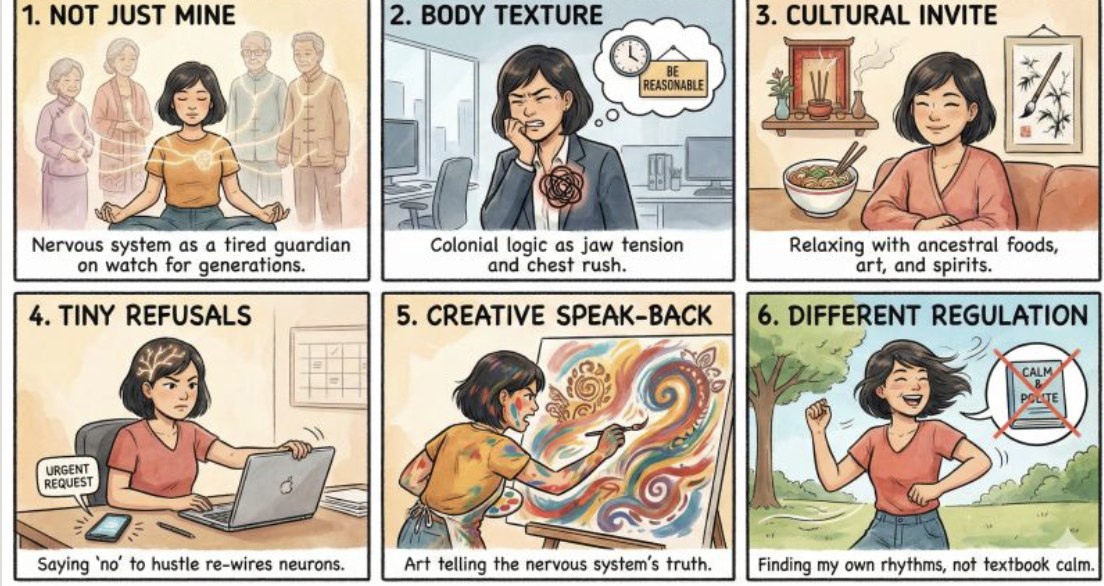
𝟭. 𝗠𝘆 𝗻𝗲𝗿𝘃𝗼𝘂𝘀 𝘀𝘆𝘀𝘁𝗲𝗺 𝗶𝘀 𝗻𝗼𝘁 𝗷𝘂𝘀𝘁 𝗺𝗶𝗻𝗲
I notice my anxiety, overworking, shutdown, and hypervigilance are not random personal quirks. They are family stories, migration stories, racialized stories, colonial stories, living in my body. If I listen with intuition, my nervous system feels less like a faulty machine and more like a very tired guardian who has been on watch for generations.
𝟮. 𝗖𝗼𝗹𝗼𝗻𝗶𝗮𝗹 𝗹𝗼𝗴𝗶𝗰 𝗳𝗲𝗲𝗹𝘀 𝗹𝗶𝗸𝗲 𝗮 𝘁𝗲𝘅𝘁𝘂𝗿𝗲 𝗶𝗻 𝗺𝘆 𝗯𝗼𝗱𝘆
I notice whiteness and colonial urgency as sensations, not just ideas. A tightening in my jaw when I want to say something unpopular. A rush in my chest when I think about resting. A sick feeling when I am about to overexplain myself to sound reasonable. My body often knows I am about to abandon myself before my mind does.
𝟯. 𝗠𝘆 𝗯𝗼𝗱𝘆 𝗿𝗲𝗹𝗮𝘅𝗲𝘀 𝘄𝗵𝗲𝗻 𝗺𝘆 𝗼𝘄𝗻 𝗰𝘂𝗹𝘁𝘂𝗿𝗲𝘀 𝗮𝗻𝗱 𝘄𝗼𝗿𝗹𝗱𝘀 𝗮𝗿𝗲 𝗶𝗻𝘃𝗶𝘁𝗲𝗱 𝗶𝗻
When I bring in Malaysian Chinese food, incense, altars, Hokkien or Mandarin words, art-making, dreams, spirit, and more-than-human kin, my nervous system responds. My breath goes slower. My shoulders drop. I remember that I have many medicines that did not come from a manual. Intuitively, neurodecolonization feels like letting my own worlds sit at the centre, and letting Western tools become guests.
𝟰. 𝗧𝗶𝗻𝘆 𝗮𝗰𝘁𝘀 𝗼𝗳 𝗿𝗲𝗳𝘂𝘀𝗮𝗹 𝗳𝗲𝗲𝗹 𝗹𝗶𝗸𝗲 𝗯𝗶𝗴 𝗿𝗲𝘄𝗶𝗿𝗶𝗻𝗴
Things that look small on the outside feel huge inside my body. Leaving an email until tomorrow. Saying no to a request that would burn me out. Allowing myself to be messy in front of someone I trust. Each small refusal of hustle and self-erasure feels like my neurons choosing a different path, one that is less loyal to colonial scripts about worth and productivity.
𝟱. 𝗠𝘆 𝗰𝗿𝗲𝗮𝘁𝗶𝘃𝗶𝘁𝘆 𝗶𝘀 𝗽𝗮𝗿𝘁 𝗼𝗳 𝗵𝗼𝘄 𝗺𝘆 𝗻𝗲𝗿𝘃𝗼𝘂𝘀 𝘀𝘆𝘀𝘁𝗲𝗺 𝘀𝗽𝗲𝗮𝗸𝘀 𝗯𝗮𝗰𝗸
When I draw the tightness, collage the hustle, or paint my ancestors and land, I am not making art on the side. I am watching my nervous system tell the truth in colour and image. The art often knows before I do that something is shifting. Neurodecolonization, intuitively, feels like giving my body a paintbrush and saying, “You go first, I will catch up with words later.”
𝟲. 𝗥𝗲𝗴𝘂𝗹𝗮𝘁𝗶𝗼𝗻 𝗹𝗼𝗼𝗸𝘀 𝗱𝗶𝗳𝗳𝗲𝗿𝗲𝗻𝘁 𝗶𝗻 𝗺𝘆 𝗯𝗼𝗱𝘆 𝘁𝗵𝗮𝗻 𝗶𝗻 𝘁𝗵𝗲 𝘁𝗲𝘅𝘁𝗯𝗼𝗼𝗸𝘀
I notice that being fully calm is not always what my system wants or needs. Sometimes, feeling more alive, more connected, more honest, even a bit more activated, feels healthier than being flat and polite. Intuitively, neurodecolonization is about finding my own rhythms, not forcing my body into someone else’s idea of regulated.
Conclusion
Neurodecolonization reminds us that healing is not about fixing what is “wrong” with us; it is about remembering that our nervous system carries stories of history, culture, survival, and relationships. When we shift from asking “What’s wrong with me?” to “What has my body been protecting me from?”, shame softens and compassion grows.
Decolonizing healing invites us to move more slowly, listen more deeply, and make space for many ways of being well. It honours creativity, culture, community, and connection as real medicine, not extras, not alternatives, but essential pathways to care.