Art Therapy-Inspired Practices Clients Can Try Between Sessions
By Huma Durrani.
Let’s begin with an important distinction: art-making on one’s own is not the same as art therapy.
Art therapy takes place within a therapeutic relationship. It is facilitated by a clinician who is clinically trained in psychotherapy and skilled in working with images, process, symbolism, affect regulation, and meaning-making. The presence of a trained therapist allows the art-making experience to move beyond emotional expression into reflection, integration, healing, and resolution. However, that does not mean that artmaking for insight and reflection can only be done within the therapy room. Many art therapists offer clients simple, supportive directives to use between sessions. These are not meant to replace therapy, analyze trauma, or “fix” anything. Rather, they serve as grounding, reflective, and regulating practices-ways to stay connected to oneself, notice internal states, and gently support the nervous system.
Below are three art therapy–informed practices that clients may find helpful between sessions, especially when feeling overwhelmed and dysregulated.
1. Regulate Your Breath Through Bilateral Drawing
Therapists often use this directive to support nervous system regulation, grounding, and present-moment awareness.
What you’ll need:
• A large piece of paper (ideally A2)
• Pastels, markers, or crayons
• A quiet space where you can sit comfortably on the floor
How to do it:
• Place the paper on the floor in front of you.
• Sit in a comfortable position.
• Begin by noticing your breath-no need to change it.
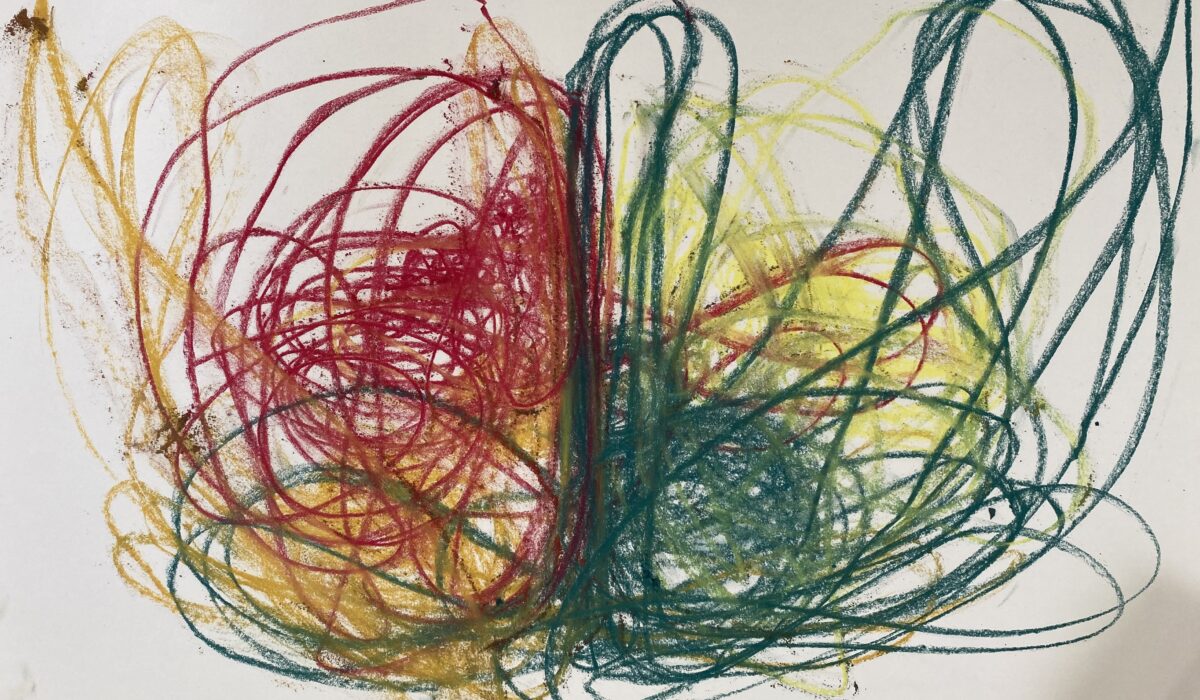
• As you inhale and exhale, allow both hands to move across the page responding to the rhythm of your breath.
• Remember, there is no “right” image. Lines, shapes, and marks of any size and shape are okay as long as you are mirroring your breath.
Purpose:
This practice is not about creating meaning or interpreting the drawing. Its purpose is regulation, not insight. Many people find that syncing movement with breath helps calm the body, settle racing thoughts, and restore a sense of internal balance.
2. How Full Is Your Plate?
When life feels overwhelming, the mind often loses clarity. This directive offers a gentle way to externalize stressors and reflect on priorities without judgment.
What you’ll need:
• A sheet of paper (or a paper plate)
• Pen, pencil, or markers
How to do it:
• Draw a large circle to represent your plate.
• Draw one or two concentric circles inside it.
• In the center, write or draw the most important priority in your life right now.
• In the surrounding circles, place other responsibilities, concerns, or stressors that are taking up space.
Pause and reflect:
• Is my plate too full?
• What truly needs to stay?
• What could be set aside, postponed, or simplified?
This is a reflective practice, not a problem-solving exercise. Its value lies in seeing your internal load and giving yourself permission to focus on what matters most.
3. Draw Where You’re Holding Tension
This directive supports mind–body awareness and helps notice how stress or emotion may be held physically.
What you’ll need:
• Paper
• Any drawing materials
How to do it:
• Gently scan your body for areas of tightness or discomfort.
• On the paper, draw a simple body outline or use abstract shapes and colors.
• Represent the sensation as it feels heavy, sharp, tingling, etc.
• Allow the image to exist without fixing or analyzing it.
This practice is about awareness, not release. Any strong emotional material that emerges is best explored with a trained therapist present.
A Gentle Reminder
These practices are not therapy and are not intended to replace working with a clinically trained professional. They are best used as supportive companions to therapy, offering moments of grounding, reflection, and self-connection between sessions.