
When Self-Awareness Feels Overwhelming
Creative Arts Connect · Jun 1, 2025 · 4 min read


Creative Arts Connect
Self-awareness is often described as a goal in therapy and personal growth
To understand one’s thoughts, emotions and patterns is generally considered beneficial. It can support insight, guide decision-making and deepen a sense of connection to one’s internal experience. However, there are times when increased awareness does not feel grounding or clarifying. Instead, it may feel intense, persistent or difficult to manage.
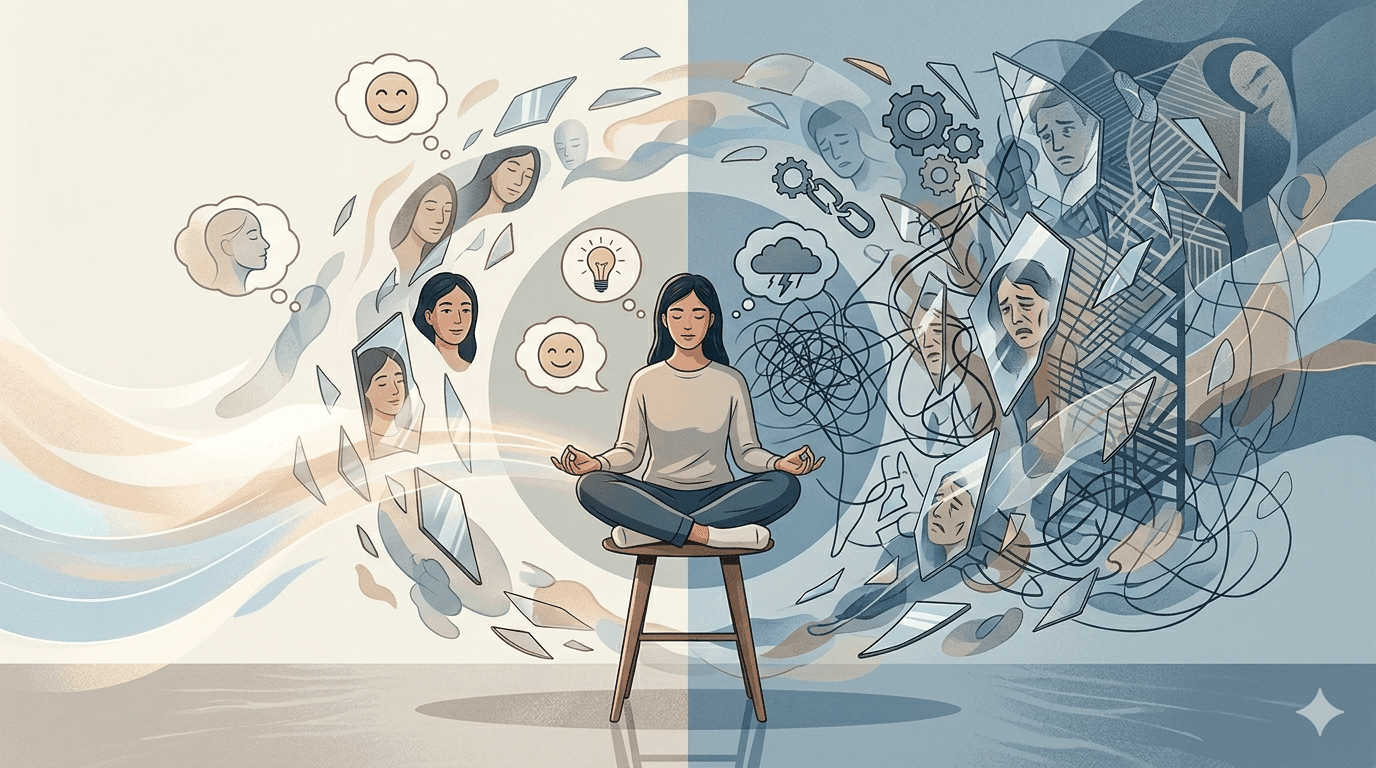
In these moments, self-awareness can shift from being supportive to feeling overwhelming.
Recognising this shift is an important part of understanding how awareness functions and how it can be approached more gently.
When Awareness Becomes Too Much
Self-awareness becomes overwhelming when there is more information than the system can comfortably process.
This can happen gradually, as insight builds over time or suddenly, when something becomes clear in a way that feels immediate and significant. Individuals may notice that they are able to identify patterns, emotions or internal responses with increasing precision but do not feel more settled as a result.
Instead, they may experience:
In these states, awareness is present, but it is not integrated.
The Difference Between Awareness and Capacity
Awareness alone is not sufficient for processing.
For awareness to be helpful, it needs to be accompanied by capacity. Capacity refers to the ability to remain with an experience without becoming overwhelmed and to move between engagement and rest.
When awareness exceeds capacity, the result can feel like exposure without support.
This is particularly relevant when:
Without sufficient grounding or regulation, these insights can feel destabilising rather than clarifying.
The Role of the Nervous System
The experience of overwhelm is closely linked to the nervous system.
As awareness increases, the body may respond with heightened activation. This can present as restlessness, tension or a sense of urgency. In some cases, it may lead to withdrawal or shutdown.
These responses are not indicators that awareness is harmful. They reflect the system’s attempt to manage intensity.
In such states, continuing to analyse or deepen insight may not be the most supportive approach. Instead, attention may need to shift toward regulation and pacing.
Reconsidering the Pace of Insight
There is often an implicit belief that more awareness leads to faster healing.
In practice, the relationship between awareness and change is not linear. Insight does not need to be immediate, complete or continuous in order to be meaningful.
Slowing the pace of awareness can allow for integration.
This may involve:
This approach does not reduce the value of awareness. It supports its sustainability.
Working With Awareness in a Different Way
When self-awareness feels overwhelming, the aim is not to reduce awareness entirely but to change how it is engaged.
Below are a few approaches that can support this shift.
Shifting From Analysis to Observation
Instead of asking “Why am I feeling this,” the focus can move to “What is present right now.”
This might include:
Purpose:
This shift reduces cognitive load and supports a more grounded form of awareness.
Introducing Boundaries Around Reflection
Continuous reflection can intensify overwhelm.
Setting gentle limits around when and how reflection occurs can be supportive. For example:
Purpose:
Boundaries create rhythm, allowing the system to move between engagement and rest.
Using Creative Externalisation
Expressive practices can help move awareness out of the mind and into a tangible form.
This might involve:
Purpose:
Externalisation can reduce the intensity of internal focus and introduce a sense of distance.
The Role of the Therapeutic Relationship
When awareness becomes overwhelming, working within a therapeutic relationship can provide additional support.
A trained therapist can help:
This shared process can make it easier to stay with awareness without becoming overwhelmed by it.
A Closing Reflection
Self-awareness is not inherently stabilising.
When it expands beyond the system’s current capacity, it can feel intense or difficult to manage. This does not mean that awareness should be avoided. It suggests the need for pacing, regulation and a different way of relating to what is known.
In this context, awareness becomes less about continuous analysis and more about sustained, manageable contact with experience.
Over time, this approach allows insight to be integrated, rather than accumulated, supporting a process of understanding that is both gradual and more sustainable.
Ready to Find the Right Therapist?
Our 3-minute matching quiz connects you with a vetted creative arts therapist who fits your needs.
Find Your Match →