
More Powerful Than the Bully
By Huma Durrani.
Tia was a 13-year-old autistic girl, and Leo an 8-year-old autistic boy. They met once a week for joint art therapy sessions. Over time, their relationship evolved in remarkable ways. From being hesitant and guarded, they reached a point where they could make art on the same piece of paper, each in their unique style. Eventually, they began completing each other’s drawings, crossing boundaries that were once rigid, and engaging in conversations and shared storytelling.
As their connection deepened, so did their artistic expression. What began as literal representations slowly shifted into more metaphorical and symbolic imagery—a significant milestone for individuals with autism, who often find it difficult to express emotions due to the abstract nature of feelings. While they might excel at concrete and literal representation, symbolic expression can pose a real challenge.
In one session, the children were given a directive: to draw each other. The goal was to foster empathy and shift their focus beyond the self. After finishing their drawings, they were invited to share their thoughts. The discussion organically turned to personal experiences, likes, and dislikes. Tia opened up about being bullied at school, describing how boys pushed her around and called her “lazy.” Her candidness inspired Leo—usually emotionally reserved and quick to defend himself—to share that he too disliked being bullied and described his own experiences.
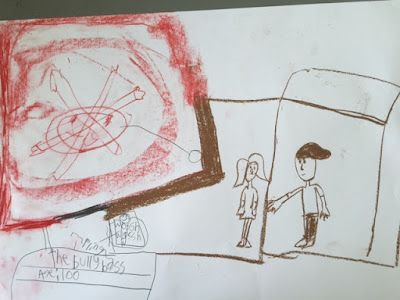
This shared moment of vulnerability created a powerful opportunity for healing. While external circumstances may remain unchanged, how we internalize and remember them can be transformed. The children were then invited to draw their bullies, giving form to their fears within the safety of the art therapy space. Once the drawings were complete, they were encouraged to contain the bullies by drawing boundaries around them—literally and symbolically removing their power (see artwork). Both Tia and Leo built substantial walls around their bullies and even pointed out to one another where the walls could use reinforcement.
This session beautifully illustrated how dyadic art therapy can foster open communication and mutual support. Art became a bridge for Tia and Leo, allowing them to confront and process painful emotions, while the therapist provided the safety and structure for growth and transformation.
AutismBullyingSocial Skills